

Game Frameworks
Lecture 01: Introduction to Game Engines
Edirlei Soares de Lima
<edirlei.lima@universidadeeuropeia.pt>
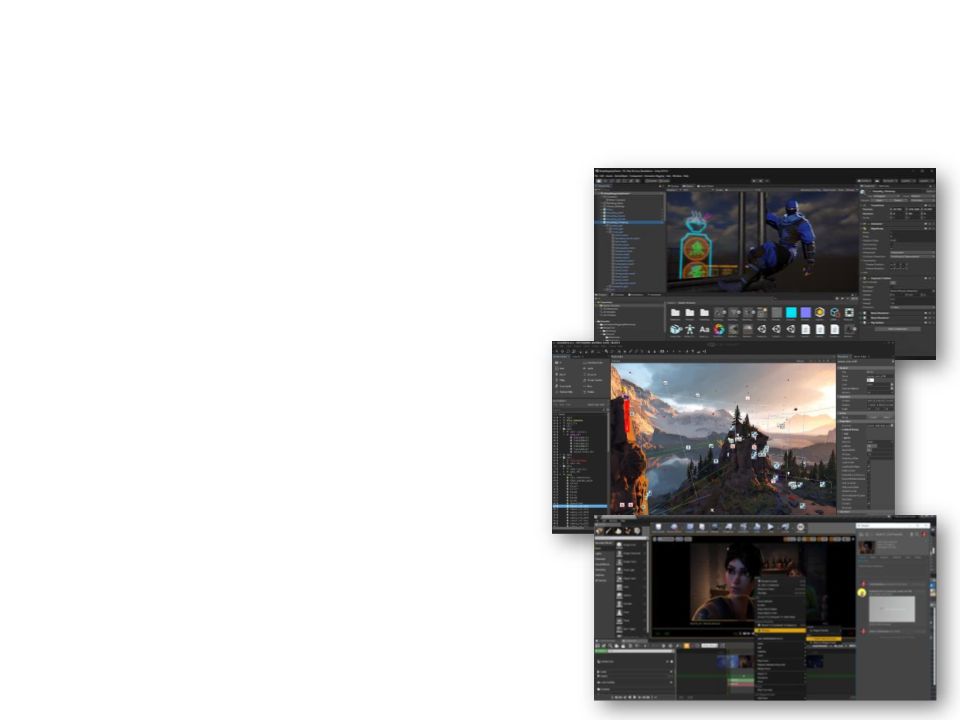
What is a Game Framework?
•
•
•
A game engine, also known as game
framework, is a software designed for
people to create games.
–
Programming libraries vs complete frameworks
A game engine is extensible and can be
used as the foundation for developing
many different games without major
modification.
Examples:
–
Quake engine (1996), Unreal Engine (1998),
Source Engine (2004), CryENGINE (2004) ,
Microsoft XNA (2006), Unity (2005), Frostbite
Engine (2008), etc...
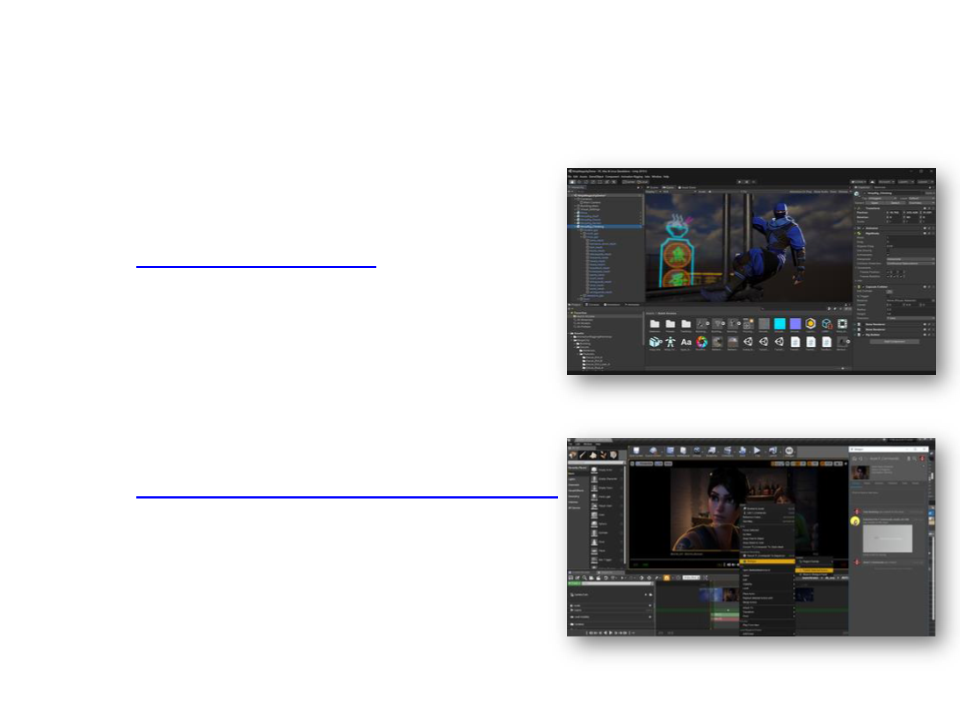
Examples of Game Engines
•
•
Unity
– https://unity.com/
Unreal Engine
–
https://www.unrealengine.com
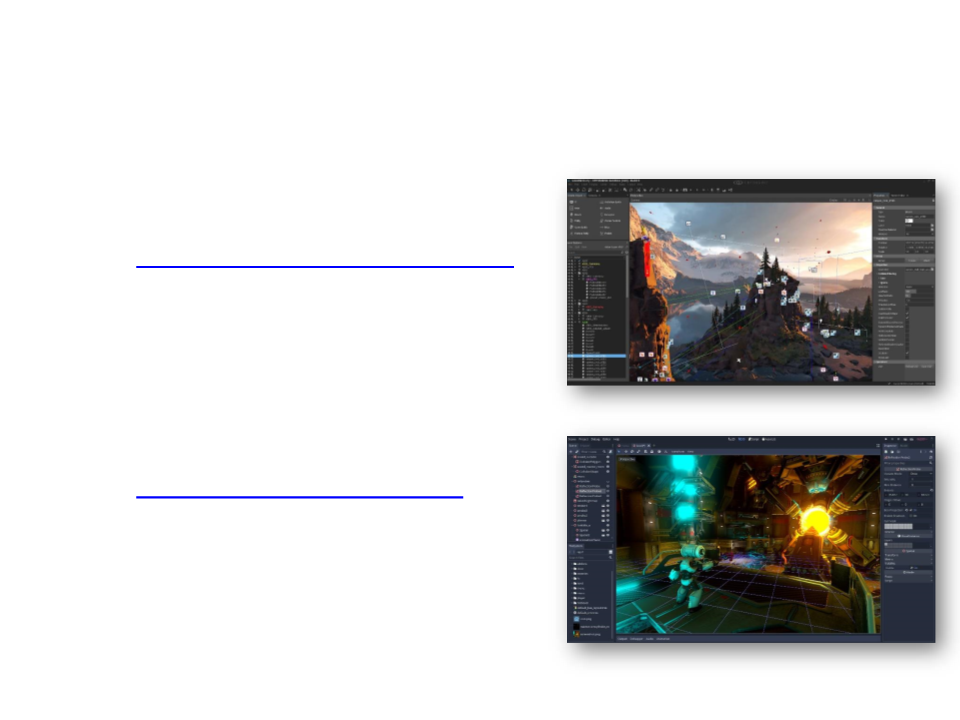
Examples of Game Engines
•
•
CryENGINE
– https://www.cryengine.com/
Godot
–
https://godotengine.org/
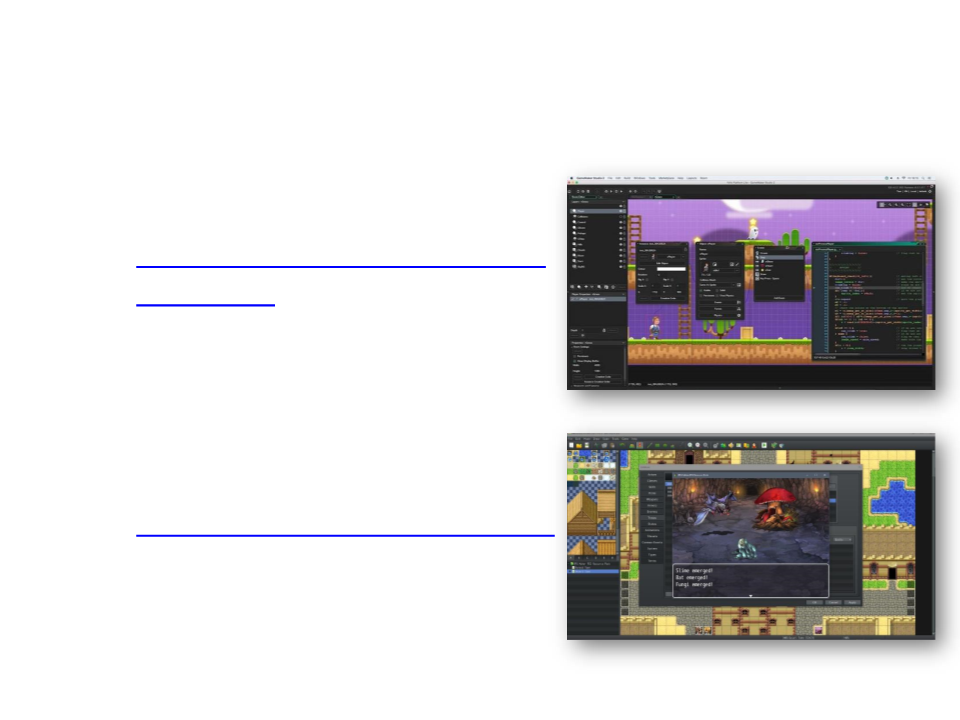
Examples of Game Engines
•
•
GameMaker
– https://www.yoyogames.com/g
amemaker
RPG Maker
–
https://www.rpgmakerweb.com
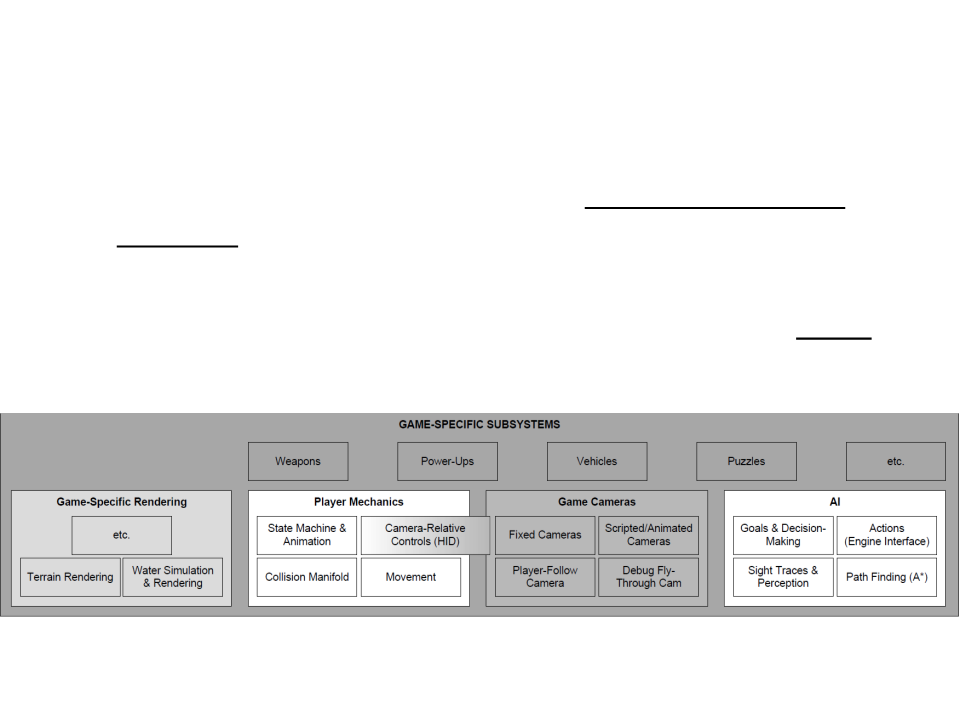
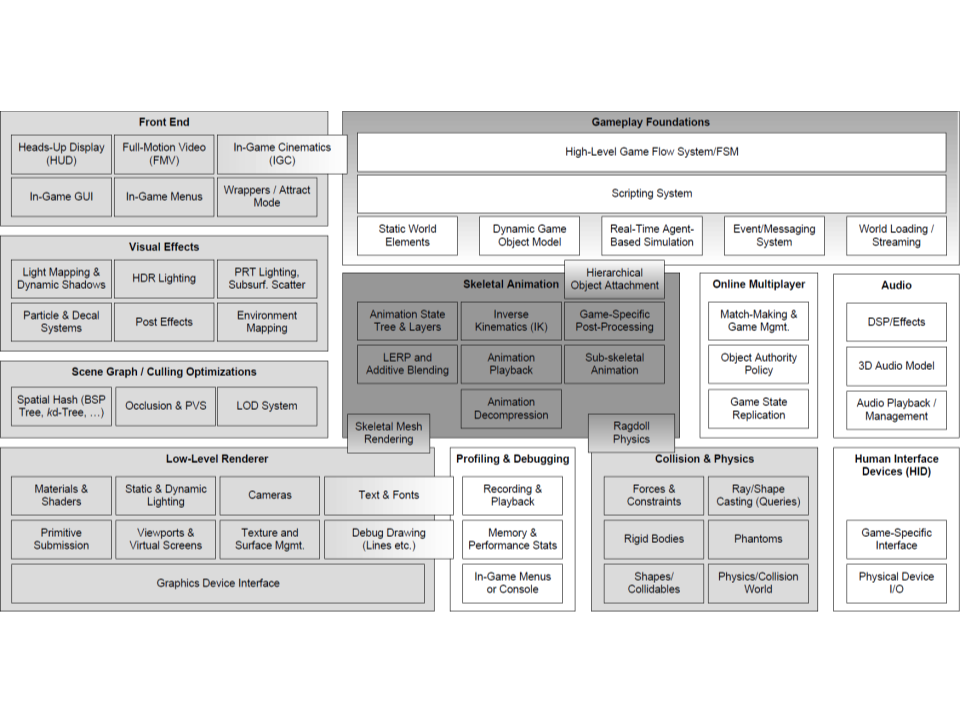
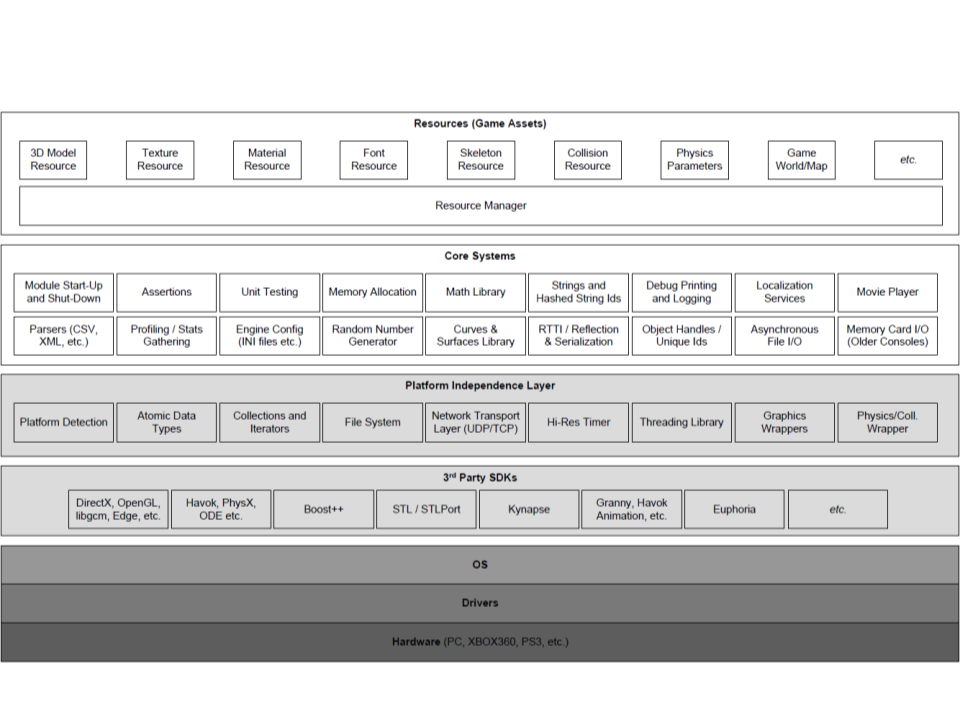
Game Engine Architecture
•
•
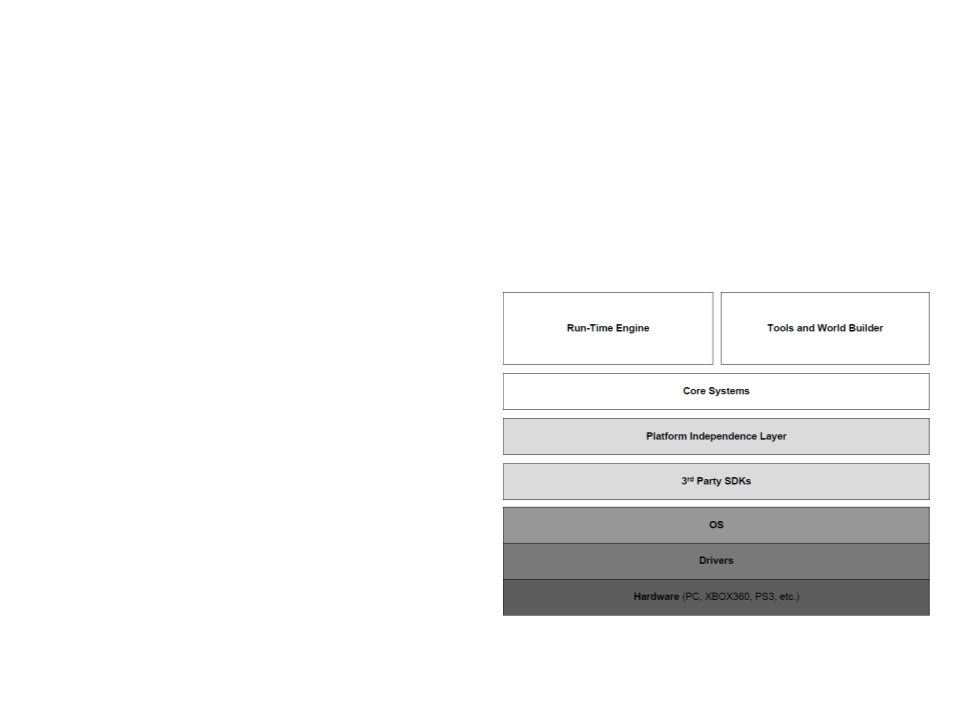
A game engine generally consists of a runtime component and
a tool suite.
Like most software systems, game engines are built in layers.
.
.
.
.
.
.
.
.
.
.
.
.
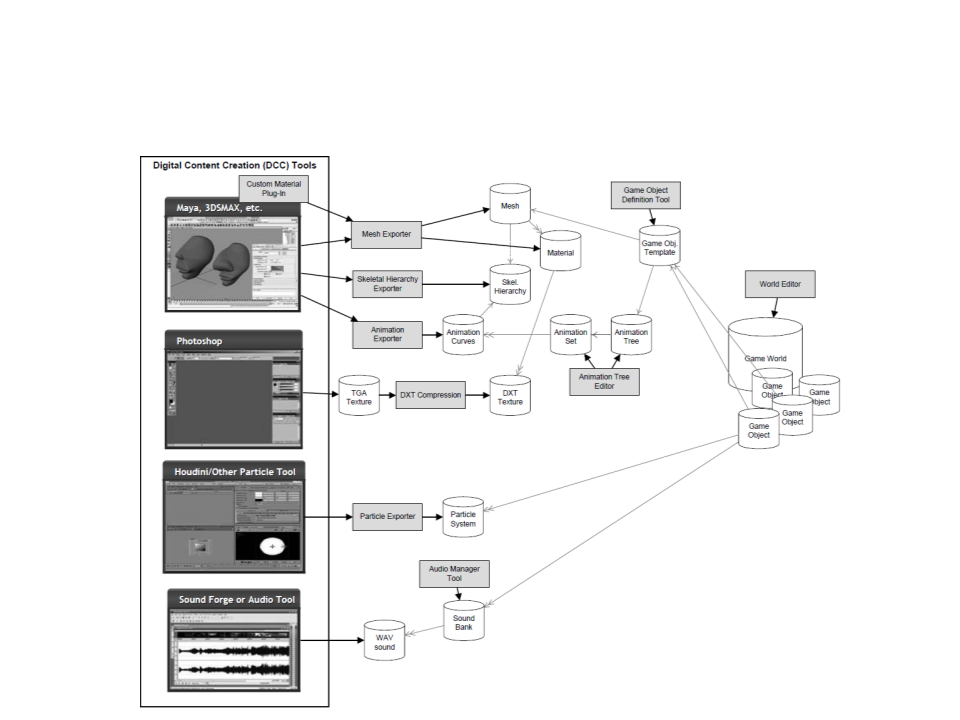
Digital Content Creation Tools
•
•
A game engine’s input data comes in a wide
variety of forms (3D mesh data, texture
bitmaps, animation data, audio files).
All of this source data must be created and
manipulated by artists.
Game Engine Architecture
•
A game engine’s tool suite may be architected in any number
of ways:
•
Stand-alone pieces of software;
•
Built on top of some of the lower
layers used by the runtime
engine;
•
Built into the game itself.

Low-Level Engine Systems
•
Low-level support systems:
–
Crucial tasks: starting up and shutting down the engine, managing the
engine’s memory usage, handling access to file systems, providing
access to a wide range of asset types, and providing debugging tools.
–
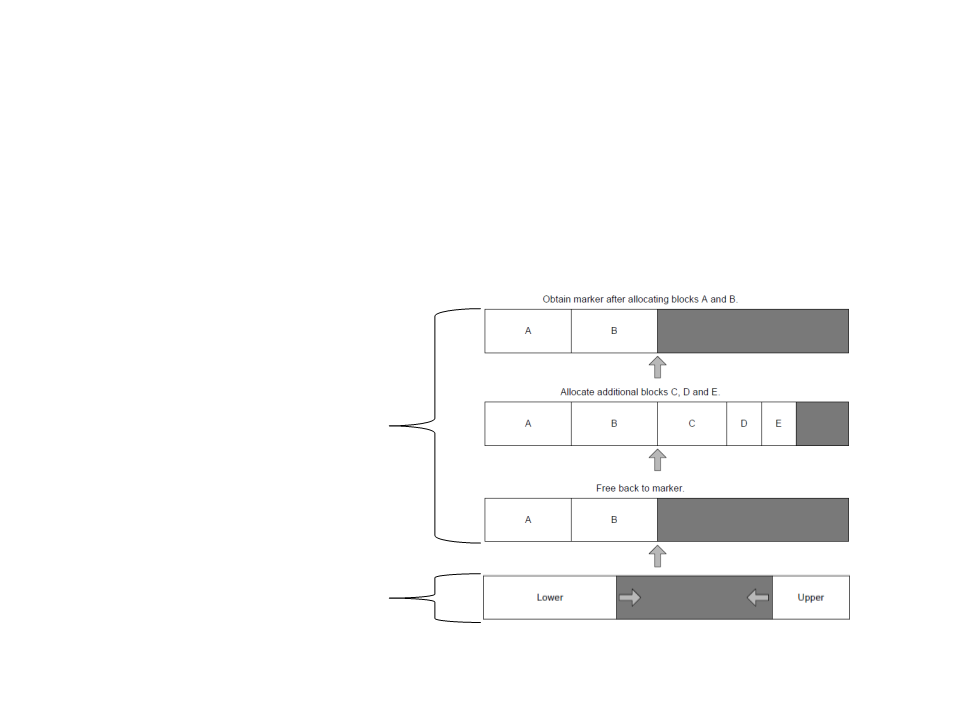
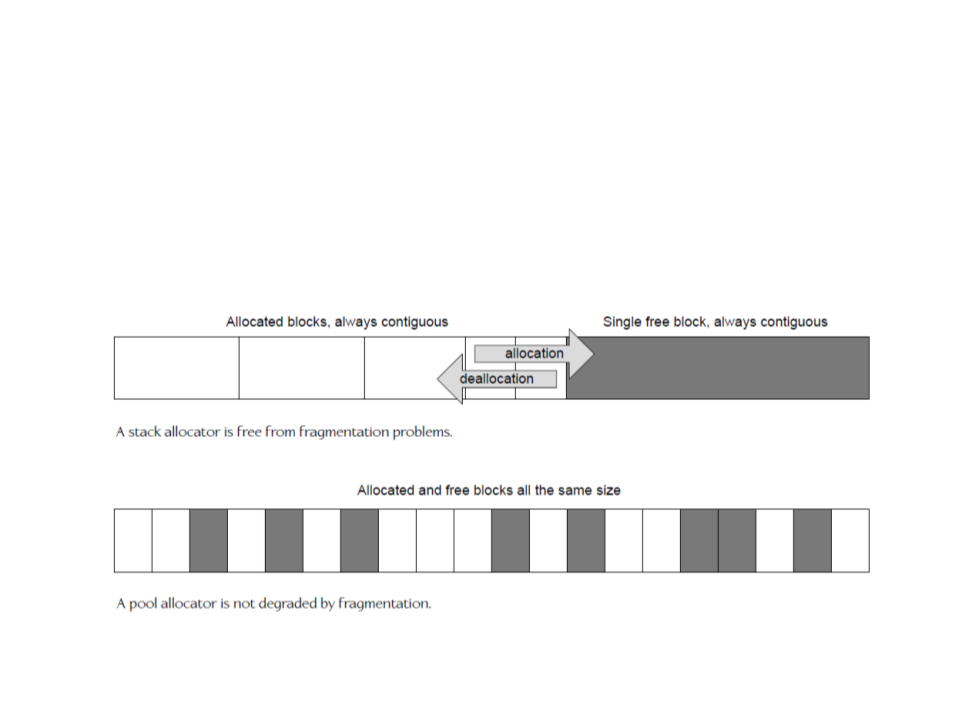
Example: Optimizing Dynamic Memory Allocation
Problem: Memory Fragmentation
Low-Level Engine Systems
•
Low-level support systems:
–
Example: Optimizing Dynamic Memory Allocation
Stack-Based Allocators
Double-Ended Stack Allocators
Low-Level Engine Systems
•
Low-level support systems:
–
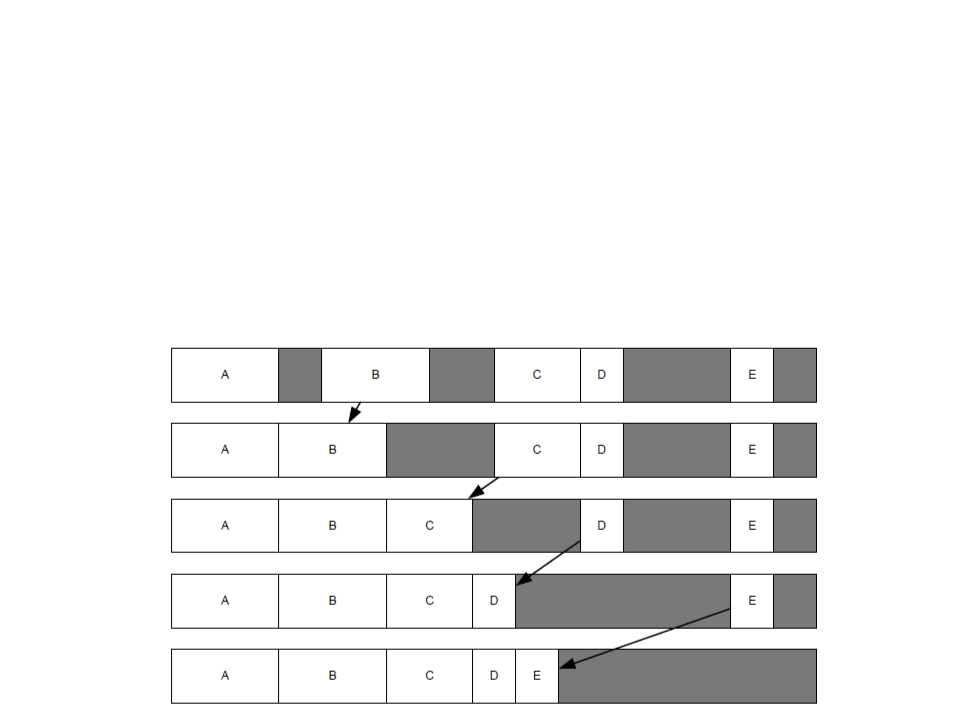
Example: Optimizing Dynamic Memory Allocation
Low-Level Engine Systems
•
Low-level support systems:
–
Example: Optimizing Dynamic Memory Allocation
•
When differently sized objects are being allocated and freed in a random order,
neither a stack-based allocator nor a pool-based allocator can be used.
•
Solution: periodically defragmenting the heap

Low-Level Engine Systems
•
Low-level support systems:
–
Example: Game Loop
while (!quit)
{
updateCamera();
updateSceneElements();
renderScene();
swapBuffers();
}
•
A game is composed of many subsystems that require periodic servicing (updates)
while the game is running: device I/O, rendering, animation, collision detection,
rigid body simulation, multiplayer networking, audio, etc.
•
The rate at which these subsystems need to be serviced varies from subsystem to
subsystem.
Low-Level Engine Systems
•
Low-level support systems:
–
Example: Game Loop
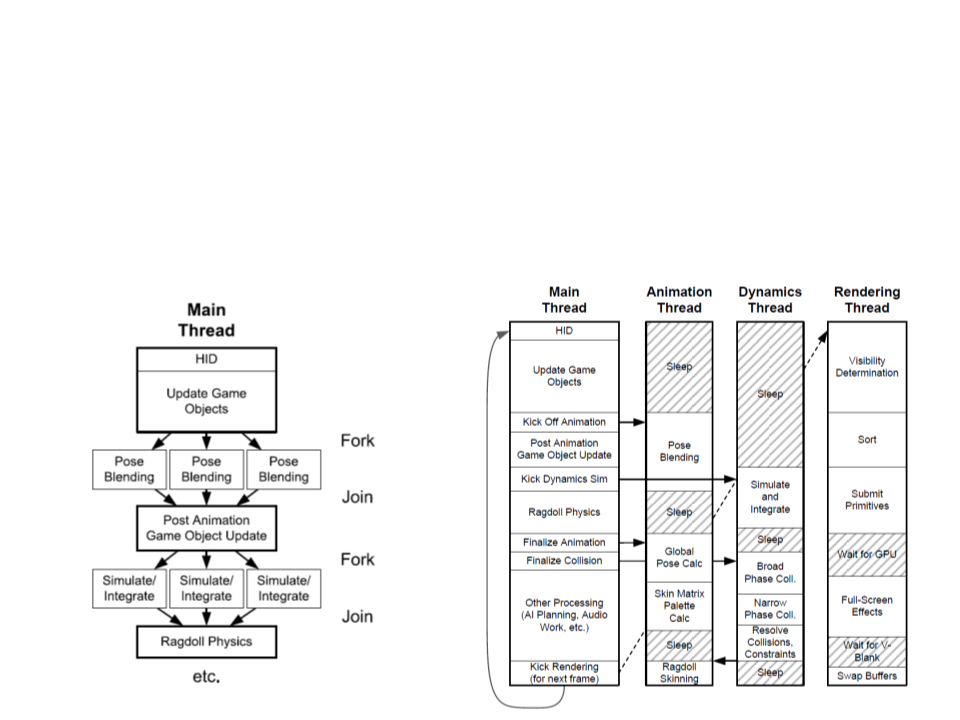
• Multiprocessor Game Loops
Rendering Engine
•
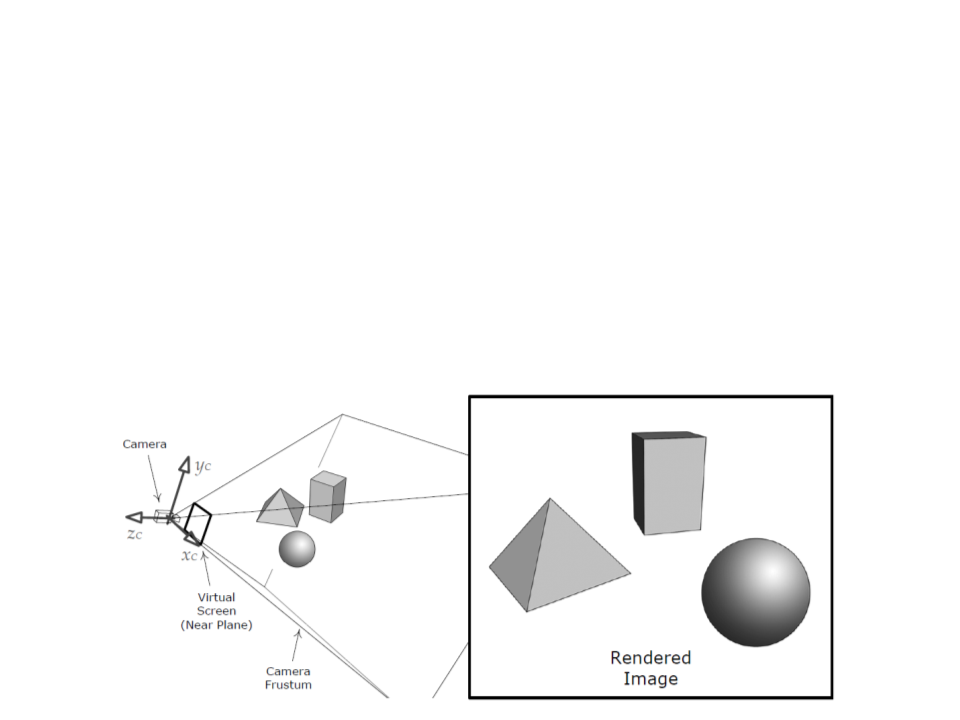
One of the basic tasks of a game engine is rendering 2D or 3D
objects:
–
Taking a scene, or model, composed of many geometric objects arranged
in 3D space and producing a 2D image that shows the objects as viewed
from a particular viewpoint.
–
Rendering involves considering how each object contributes to each pixel.
Rendering Engine
•
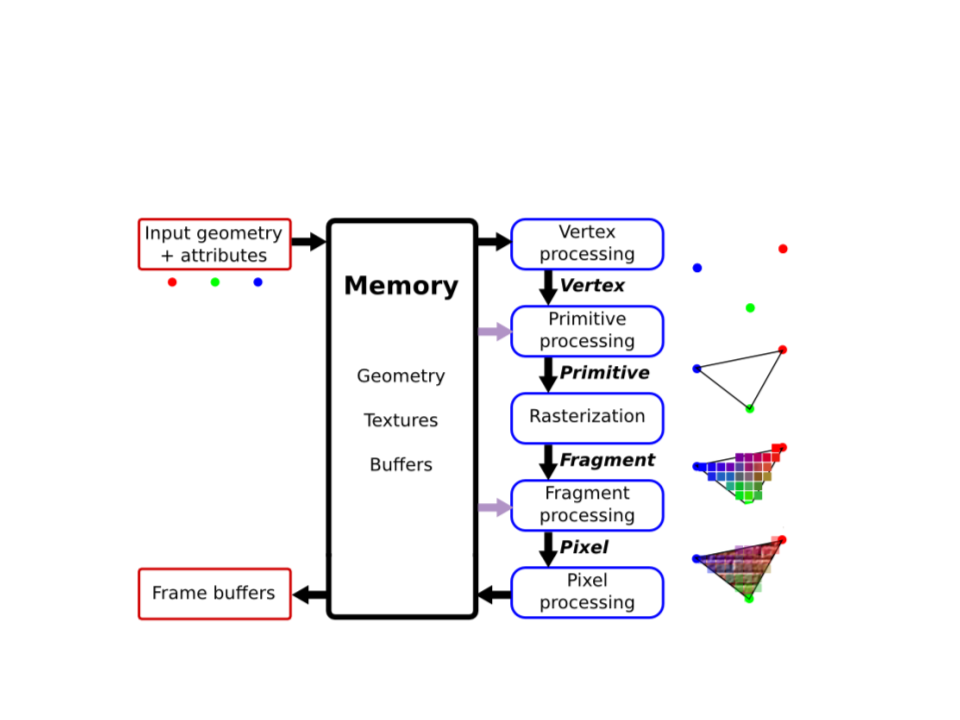
Rendering Pipeline:
Rendering Engine
•
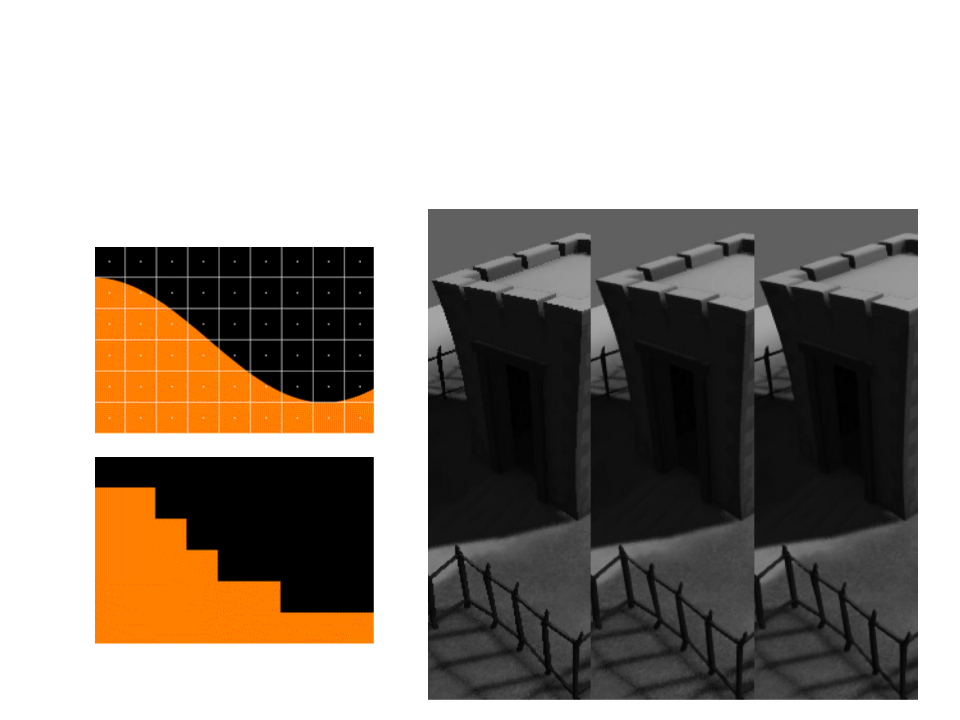
Example of problem: aliasing
Rendering Engine
•
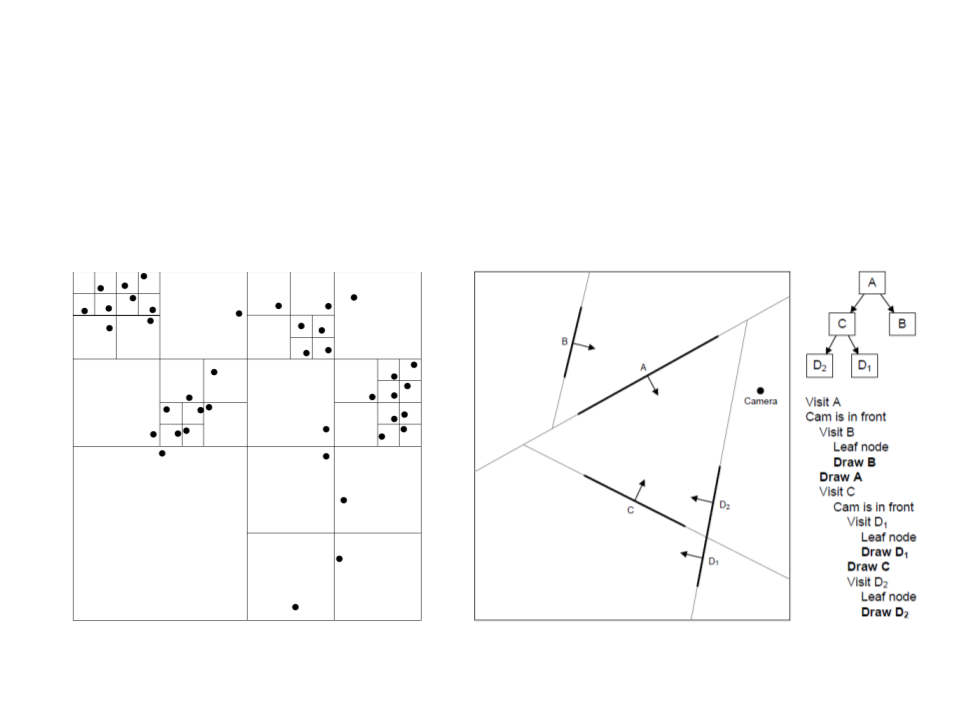
Optimizations: handling large game worlds
–
Scene graphs: quadtrees, octrees, BSP trees, etc.
Animation Systems
•
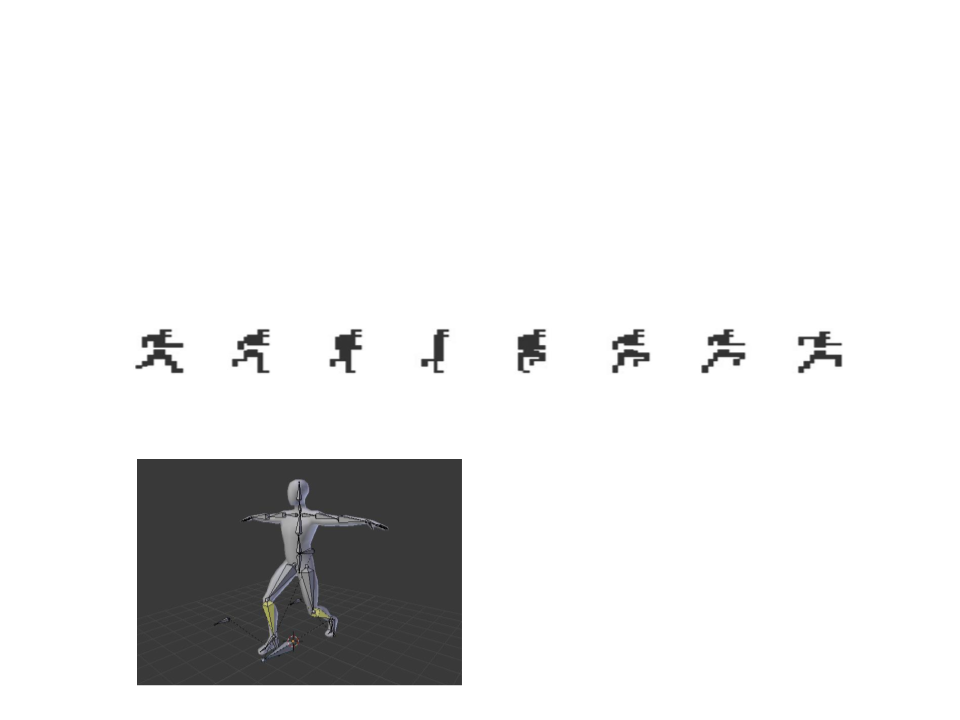
The majority of modern games revolve around characters that
need to move in a fluid and organic way.
–
Sprite animation:
–
Skinned animation:
Animation Systems
•
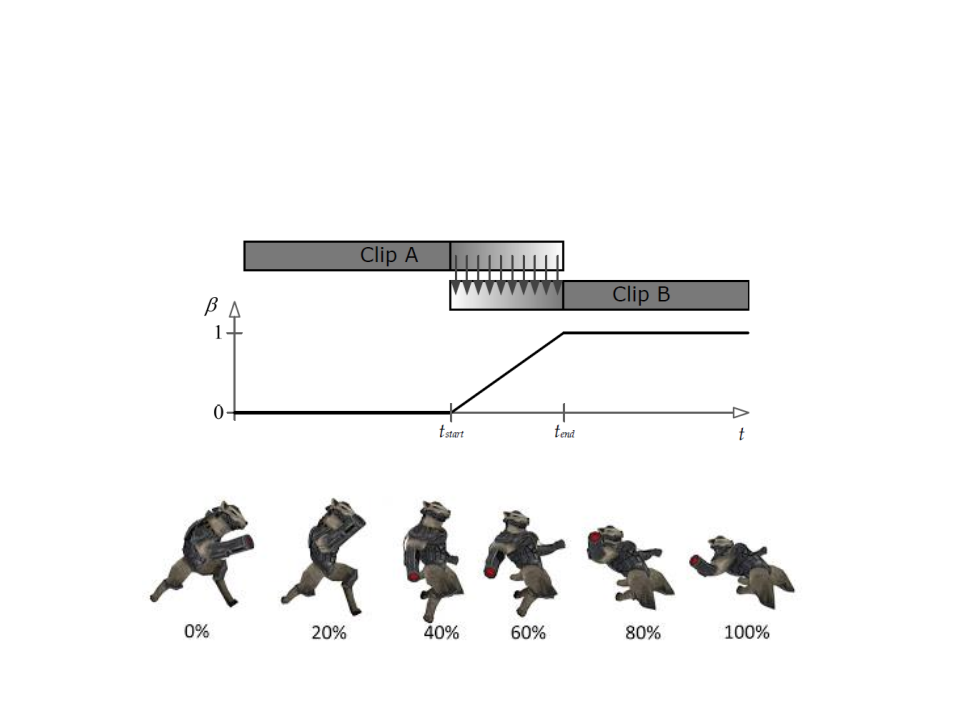
Example of problem: animation blending
Physics Engine
•
•
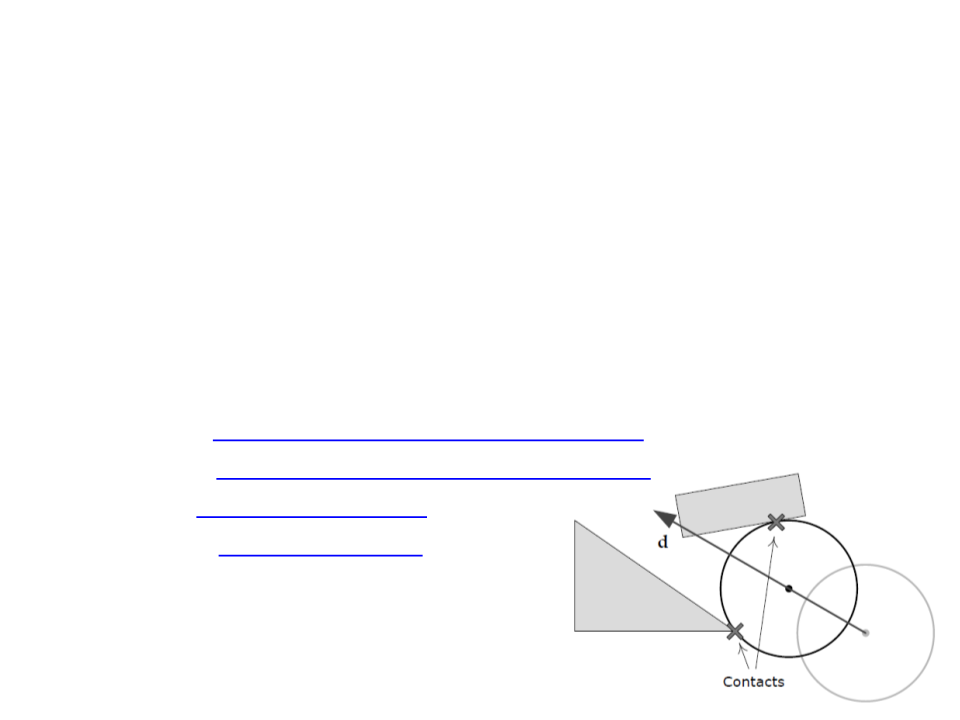
Rigid body dynamics and collision detection.
–
Rigid body: infinitely hard and non-deformable solid object.
–
Dynamics: process of determining how rigid bodies move and interact
over time under the influence of forces.
Many game engines make use of a physics middleware:
–
–
–
–
PhysX: https://developer.nvidia.com/physx-sdk
Havok: https://www.havok.com/havok-physics/
ODE: http://www.ode.org/
Box2D: https://box2d.org/
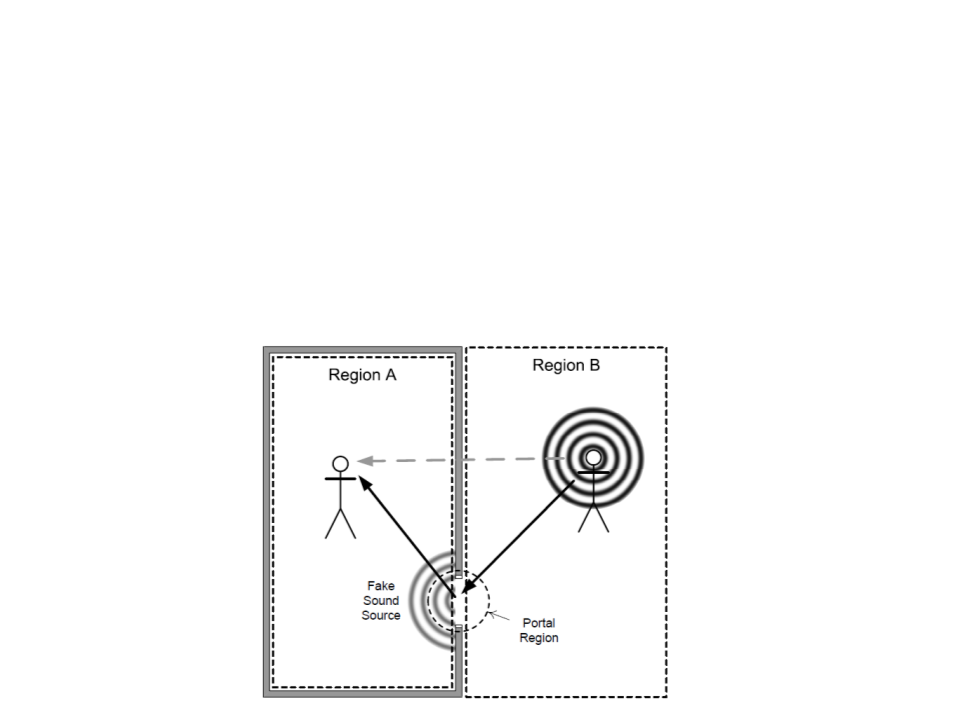
Audio Engine
•
Games immerse the player in a realistic virtual environment
and audio is an important tool to accurately reproduce what
the player would actually hear if he were present in that
environment.
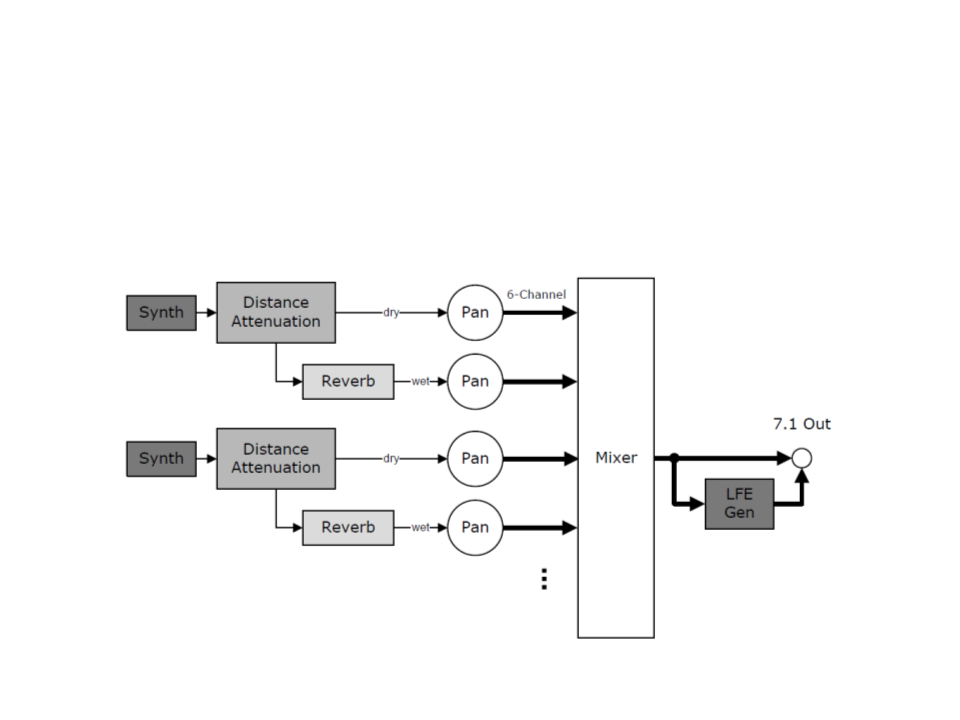
Audio Engine
•
As the rendering process, audio also can have a dedicated
pipeline.
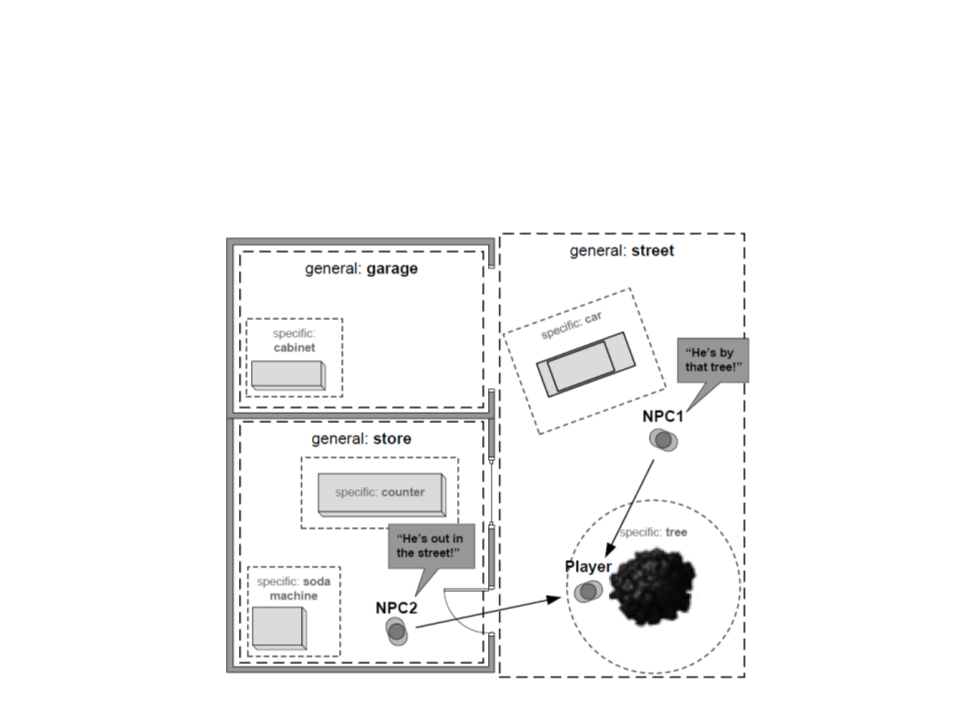
Audio Engine
•
Context-Sensitive Dialog

Further Reading
•
Gregory, J. (2014). Game Engine Architecture (2nd ed.). Boca Raton, FL: A
K Peters/CRC Press. ISBN: 978-1-4665-6001-7
–
–
–
Part I: Foundations
Part II: Low-Level Engine Systems
Part III: Graphics, Motion and Sound